The Ultimate Setup Guide for Your Rog Spatha
Introduction
The Rog Spatha occupies a distinct niche among high-end gaming mice: an MMO-oriented, desktop-first design that blends a tactile array of programmable buttons with desktop charging and customizable lighting. As a premium product aimed at players who require many macros, reliable performance, and an immersive aesthetic, the Spatha is often evaluated not only on raw sensor specs but on ergonomics, software flexibility, and how well it integrates into a player’s broader setup.
This guide takes an editorial, practical approach: a concise product review and analysis, real-world use cases buyers care about, an actionable setup walkthrough, a buying guide to prioritize features, and a comparison with other mice that potential buyers commonly consider. The goal is to help readers understand what the Spatha offers, how to configure it for specific playstyles, and whether it fits their needs.
Product review and analysis
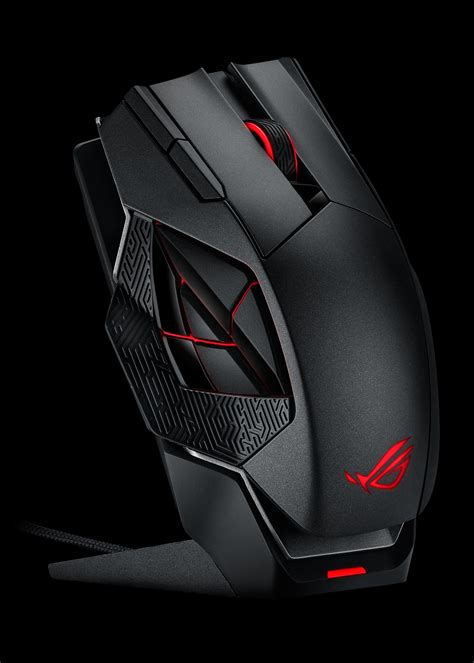
The Spatha is designed for desktop-centric MMO players and content creators who want a large, feature-rich mouse with a docking station and extensive customization. Rather than being a lightweight esports mouse, the Spatha focuses on control, durability, and versatility in macros.
Key strengths of the Spatha include:
- Multiple programmable side buttons laid out to support complex keybind setups and quick access to macros.
- Hybrid connectivity with a desktop dock that serves as a charger and a wired/receiver anchor for low-latency operation.
- Extensive on-board and software-driven profile support—able to store macros and lighting settings if switched between systems.
- Customization with RGB lighting compatible with ecosystem-sync software, allowing cohesive aesthetics with other components.
Common criticisms relate to its weight and size—both intentional design choices. A heavier mouse provides a different feel from ultralight esports mice and favors stability for keystroke-heavy MMO play rather than rapid flick aiming in competitive FPS. Additionally, users who favor portability or strictly lap gaming may find its dock-first design less convenient than pocketable wireless mice.
Real-world use cases
Understanding when the Spatha shines helps ground expectations:
- MMO and MOBA players: The multiple side buttons and reliable macro handling make it ideal for players who need dozens of bindings—for example, healers or crowd-control specialists who must activate skills rapidly without relying on the keyboard.
- Streamers and content creators: On-the-fly controls for scene switching, audio toggles, and macro commands reduce reliance on separate control decks, especially when the mouse sits centered near the keyboard.
- Productivity power users: Programmable buttons can be repurposed for application shortcuts, window management, and repetitive workflow actions in tools like video editors or CAD programs.
- Hybrid players: Players who mix MMOs with occasional single-player RPGs or strategy games benefit from the Spatha’s comfortable palm support and profile switching.
Setup checklist before first use
Before powering on the Spatha for the first time, gather the following and confirm a few basic conditions to ensure a smooth setup:
- A steady USB port (avoid low-power hubs for initial firmware and software installation).
- Updated system drivers and the official mouse configuration software from the manufacturer (install before plugin where possible).
- A quality mouse pad with a stable surface—cloth or hybrid, depending on preferred glide and braking.
- An understanding of the primary grip: palm, claw, or fingertip (this affects sensitivity and button mapping choices).
Step-by-step setup and configuration
1. Physical setup
Place the dock on a stable, flat area near the computer. Connect it to a USB port directly on the PC to maximize power and minimize latency. If the dock uses a pass-through for a wireless receiver, confirm the receiver is seated firmly to prevent connection drops.
Position the Spatha on the dock to magnetically attach and charge; allow a full charge cycle before extended wireless sessions. If the model provides a wired mode through the dock, test both wired and wireless operation to compare latency and comfort.
Looking for the best Electronics deals on Amazon?
Shop Amazon →2. Install and update the configuration software
Install the official ROG configuration suite (or the current ecosystem software). After installation, check for firmware updates for both the mouse and dock; manufacturers occasionally release performance or stability fixes that affect polling, button debounce, and wireless reliability.
3. Pin down sensitivity and polling
Set a baseline DPI and polling rate in software. Suggested starting points:
- FPS-focused: 400–800 DPI for low-sensitivity, precise aiming (paired with lower in-game sensitivity).
- MMO-focused: 800–1600 DPI for balance between quick rotation and cursor control.
- High-sensitivity preference: 1600–3200 DPI, common among players who favor quick vantage shifts.
Polling rates at 500 Hz or 1000 Hz are common; the dock can be used to check for the most stable and low-latency setting for the environment.
4. Map macros and button layers
Use the software to assign macros to side buttons. Create profile layers per game or application—MMO profiles may map skills and potions, while desktop profiles can map multimedia and productivity shortcuts. Two practical macro strategies:
- Sequence macros: Chain a rotation of abilities or commands with small delays for complex skills that benefit from consistent timing.
- Toggle macros: Map a button to toggle a repeating action (e.g., targeting cycles) when appropriate—but avoid sequences that may violate game terms of service.
Always test macros in a controlled environment (training zones or single-player content) before using them in competitive or multiplayer matches to ensure reliability and compliance.
5. Lighting and on-board profiles
Configure RGB to match ambient lighting or team colors, and use the mouse’s on-board memory to save at least one default profile that loads without software present. This is useful when switching PCs or when software is unavailable.
6. Final ergonomics and feel tuning
Fine-tune button actuation and pointer acceleration in the OS and in-game. Adjust lift-off distance if the software allows, and confirm side button placement is comfortable during extended sessions. For heavy-handed users, evaluate whether rubber grips or third-party grip tape improves control.
Maintenance and longevity tips
- Keep the dock and mouse contacts clean; dust can interfere with charging and the receiver connection.
- Inspect switch feel periodically; mechanical switches can be swapped on some models or professionally repaired if performance degrades.
- Store the mouse on the dock when not in use to preserve battery health and reduce the number of full discharge cycles.
- If the mouse supports firmware updates, apply them as they become available to maintain compatibility and performance.
Pros & Cons
- Pros
- Robust multi-button layout tailored to MMO and macro-heavy users.
- Desktop dock for convenient charging and reduced cable clutter.
- Extensive profile and macro support—useful across games and productivity apps.
- Customizable RGB and software integration for ecosystem syncing.
- Cons
- Heavier and larger than esports-style mice, which may limit appeal for competitive FPS players.
- Less portable—dock-based design is optimized for desktop setups rather than travel.
- Complexity can be overwhelming for users who only need a basic mouse.
Comparison table: Rog Spatha and common alternatives
| Model | Primary focus | Connectivity | Programmable buttons | Target user | Typical pros |
|---|---|---|---|---|---|
| Rog Spatha | MMO/Desktop | Docked wireless / wired | Multiple side buttons for macros | MMO players, streamers, productivity power users | Docked charging, rich macros, strong ergonomics |
| Alternative A (MMO-oriented) | MMO | Wired / wireless variants | Multi-button grid or side panel | Players needing dense keybinds | Smaller footprint, sometimes lighter |
| Alternative B (Esports-focused) | FPS/Competitive | Wireless or wired | Fewer programmable buttons | Competitive FPS players | Lightweight, ultra-low latency |
Buying guide: what to prioritize
The right mouse depends on the primary use case. When evaluating the Spatha against the alternatives, pay attention to the following factors in order of likely importance for an MMO-oriented buyer:
1. Button layout and ergonomics
Button ergonomics trump raw sensor numbers for MMO players. The spacing, shape, and tactile feedback of side buttons should match the player’s dominant hand and grip. Buyers who habitually use many hotkeys should check whether the onboard layout feels natural during extended sessions.
Shop the latest Electronics picks on Amazon.
View Offers →2. Software flexibility and profile storage
Strong software support for macros, multiple profiles, and per-application settings is essential. On-board memory is a major convenience—profiles that travel with the mouse avoid reconfiguration on each PC.
3. Connectivity and charging method
A dock-based charging system is convenient for a stationary desktop but reduces portability. Consider how often the mouse will be transported. For someone who competes at LANs, a smaller, lighter mouse with reliable wireless performance might be preferable.
4. Sensor and performance
Modern sensors provide ample resolution and tracking; for MMO players, consistency and low jitter matter more than maximum DPI. Test tracking on the intended mouse pad to ensure the sensor reads accurately across the full movement range.
5. Build quality and switches
Durable switches and a solid chassis extend the product lifecycle. Check warranty policies and available replacement parts in case of heavy daily use.
6. Price-to-value
Premium features like dock charging, RGB, and many buttons carry a cost. Buyers should consider whether those features will be used regularly. For buyers who do use them—streamers, MMO raiders, and productivity specialists—the additional cost often pays back in convenience.
Example configuration presets
Practical presets give a useful starting point for many users:
- MMO raiding preset: Medium sensitivity, profile with 8–12 mapped skill buttons, one macro for buff rotation, and a dedicated key for focus-targeting. Lighting set to a static color for clarity in low-light environments.
- Stream control preset: Assign scene switching, mute/unmute, and playback controls to easily reachable side buttons. Use a visual lighting cue to indicate mute or recording states.
- Productivity preset: Map copy/paste stack, window snap shortcuts, and frequently used software macros. Save a profile named “Work” in on-board memory for use on other machines.
Common pitfalls and troubleshooting
- Latency or dropouts: Ensure the dock is connected to a full-power USB port and not a bus-powered hub. Check for wireless interference from nearby devices and, if present, try a different USB port or frequency channel.
- Button misfires: Reassign or debounce macros in software and test each button in a simple text editor to confirm reliable actuation. If mechanical wear appears, consult service options.
- Software profile not loading: Verify that the profile is saved to the mouse’s on-board memory; some software defaults to PC-only profiles unless explicitly written to the device.
Conclusion
The Rog Spatha is a compelling choice for players and power users who prioritize programmable controls, desktop convenience, and software-driven customization over extreme portability and featherweight design. When set up carefully—paying attention to ergonomics, sensitivity, and macro behavior—the Spatha can streamline complex playstyles and accelerate workflows for creators and gamers alike.
Prospective buyers should match the Spatha’s strengths to their typical session type: long desktop sessions with many macros and a preference for a stable, docked experience. For those who need travel-friendly hardware or ultra-low-weight competitive mice, alternatives may better suit. For desktop-focused MMO players, streamers, and productivity-oriented users, the Spatha remains a robust, flexible tool when properly configured and maintained.