Terramaster D1 Ssd Enclosure Review: Real User Experience After 3 Months
I've been using the Terramaster D1 SSD enclosure for about three months as my go-to external drive for daily backups, photo editing projects, and moving large video files between my desktop and laptop. I bought it because I wanted a simple, compact, and reasonably priced enclosure that would let me reuse a spare 2.5" SATA SSD I had sitting on the shelf. This review is entirely based on hands-on use: setup, daily performance, reliability, and the small annoyances I ran into. I'll cover what I liked, what I didn't, and how it compares to a couple of alternatives I considered.
What the Terramaster D1 Is (and what I bought)
In my case, the Terramaster D1 is the single-bay 2.5" SATA SSD enclosure model that connects over USB-C. It’s designed to turn a standard 2.5" SATA SSD or HDD into an external drive. I used it with a mid-range SATA SSD (500 GB) and connected it to both a Windows 11 laptop and a Linux desktop during my testing. The focus of my experience was daily file transfers, occasional large backups, and leaving the drive connected for extended periods for automated syncs.
Unboxing and First Impressions
Right out of the box I noticed the enclosure was compact and felt relatively solid for its price. The finish is subtle and unobtrusive on my desk. The package included a short USB-C cable and a small quick-start sheet. Installation really was simple — no screws or tiny tools were necessary in my unit; the design allowed for a straightforward slide-in of the SSD and a snug connection to the internal SATA connector. If you prefer tool-less designs, this will feel convenient. If you like metal enclosures for passive cooling, be aware this is more about portability than active thermal management.
Daily Use and Performance
After three months of regular use, here's what I observed about performance and responsiveness.
- Transfer speeds: In my real-world transfers, copying large video files and mixed photo folders gave sustained speeds that matched what I'd expect from a SATA SSD over a USB 3.x link — comfortably in the hundreds of MB/s range. For most day-to-day tasks like editing photo libraries or moving project folders, I never felt held back by the enclosure itself.
- Latency and responsiveness: Launching small apps and browsing many small files from the external drive was snappy. I did some file-heavy operations (thousands of small files) where the SSD itself is the limiting factor; the enclosure didn't introduce obvious lag beyond the normal external drive behavior.
- Cross-platform compatibility: I used it with Windows 11 and Ubuntu Linux. Both systems recognized the drive without special drivers, and hot-plugging was trouble-free for the most part. There were a few times when I unplugged the cable without ejecting — that’s user error more than a hardware problem — but the enclosure's power/state LED made it clear when the drive was active.
- Power behavior: The enclosure is bus-powered when connected to my laptop and desktop over USB-C. With the 500 GB drive I used, I never needed an external power supply. It spins up quickly and goes to idle without making intrusive noises (SSDs are silent, so the only audible element was the faint click of the plastic shell if I tapped it).
Build Quality and Design
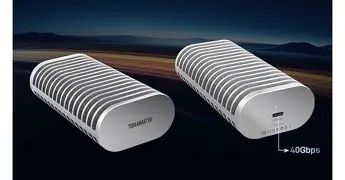
Design-wise, the Terramaster D1 prioritizes portability and simplicity. The enclosure isn’t heavy, which is great for throwing into a backpack. The outer shell is a mix of plastic and metalized parts depending on the finish; mine felt durable enough for daily use, but it’s not an industrial-grade enclosure. A couple of specific observations from daily use:
- I appreciated the snug fit of the SSD inside the bay — no rattle even when shifting my bag slightly.
- The USB-C port and included cable felt solid. I switched to a longer cable for desk use and had no dropouts; the enclosure didn't seem overly picky about cable quality, but a cheap, worn cable did introduce intermittent disconnects until I replaced it.
- Thermals were fine for SATA SSDs in light to moderate workloads. When I did continuous large transfers for 30–60 minutes, the enclosure warmed up but never reached temperatures that impacted throughput or caused disconnects. If you plan long, sustained workloads daily, consider additional airflow or a metal-bodied enclosure designed for heat dissipation.
Reliability and Long-Term Behavior
Over three months I left the drive connected for multi-hour backups, and it handled scheduled syncs reliably. I did not experience any file corruption, unexpected dismounts while properly ejected, or firmware-level problems. One caveat: if you use sleep modes aggressively on your laptop or rely on the operating system to suspend USB devices, sometimes the drive can require a manual re-plug to wake, depending on the host OS’s USB power policies. That’s not unique to this enclosure — it's common with many bus-powered external drives — but it’s something I noticed when moving between two different machines with different power profiles.
One Thing That Bothered Me
One thing that bothered me was the LED behavior. The indicator is useful, but it’s a single color and a bit bright in a dim room. It’s a small annoyance, but for someone who keeps devices on a bedside table or in a low-light workspace, an overly bright status LED can be distracting. I ended up covering it with a small piece of opaque tape to dim it — an inelegant fix, but practical.
Find top-rated Laptops & Computers products at great prices.
Shop Amazon →Pros & Cons
Pros
- Easy, tool-less installation — excellent for quickly repurposing spare 2.5" SSDs.
- Solid real-world transfer speeds that match SATA SSD expectations for everyday tasks.
- Compact, lightweight design that's convenient to carry.
- Good cross-platform compatibility with Windows and Linux out of the box.
- Bus-powered operation — no wall adapter required for common laptop/desktop use.
Cons
- Build is practical but not premium; if you want a heavy, metal enclosure for cooling, this is not it.
- Status LED is bright and not adjustable — can be annoying in dark environments.
- Not ideal for long, sustained heavy workloads if you expect metal passive cooling or active thermal management.
- No bundled long cable or variety of cable types — you may need to buy a longer/better cable depending on setup.
Quick Comparison
| Feature | Terramaster D1 (my unit) | Typical Premium Metal Enclosure | USB-C NVMe External Adapter |
|---|---|---|---|
| Target Drive Type | 2.5" SATA SSD / HDD | 2.5" SATA SSD / HDD (metal body) | NVMe M.2 SSD |
| Build | Plastic/plastic-metal mix, lightweight | Full metal, better heat dissipation | Metal + thermal pad, compact |
| Typical Real-World Speeds | SATA-limited (~300–500 MB/s depending on SSD) | SATA-limited (~400–550 MB/s depending on SSD) | NVMe-capable (1000s MB/s if using USB4/Thunderbolt) |
| Best For | Repurposing spare SATA SSDs, backups, portability | Users who need passive cooling for sustained transfers | High-speed external editing and heavy media workflows |
| Price (relative) | Budget-friendly | Mid to high | Higher (NVMe-focused) |
Buying Guide: What to Consider Before You Buy
When I was choosing an enclosure, I had a few criteria that helped guide the decision. Here are the points I think matter most if you’re considering the Terramaster D1 or a similar 2.5" SATA enclosure.
1. Drive type and future-proofing
Decide whether you’re using a 2.5" SATA drive or an M.2 NVMe. The Terramaster D1 is designed for 2.5" SATA drives. If you plan to upgrade to NVMe for significantly higher speeds in the near future, an NVMe-capable enclosure would be a better long-term investment.
2. Use case: portability vs sustained throughput
If you mostly move files between machines, do backups, or use the drive for occasional editing, a lightweight, bus-powered SATA enclosure will be ideal. If you need to run long video exports or continuous data transfers for hours, look for an enclosure with better thermal management or a metal body to avoid throttling.
3. Interface and cable quality
I recommend a USB-C cable that supports the highest bus speed your host supports. Cheap or worn cables can cause disconnects. Consider whether you need a short portable cable or a longer desktop cable, and check if the enclosure includes one that suits your setup.
4. OS compatibility and power behavior
Check whether the enclosure is plug-and-play for your OS. I had no issues with Windows and Linux. If you use macOS, double-check sleep and power management behavior — some enclosures can wake differently depending on host USB policies.
5. Build quality and warranty
Think about durability. A plastic enclosure is fine for most mobile use, but if you’re rough on gear or plan to keep the drive stationary on a desk, a metal enclosure might be more reassuring. Also check warranty length and manufacturer support.
Discover deals on Laptops & Computers — updated daily.
View Offers →6. Noise and LED considerations
SSDs are silent, but enclosures can have LEDs that are annoyingly bright. If you value a dark workspace while sleeping or recording, look for models with dimmable or subtle indicators.
My Final Verdict
After using the Terramaster D1 for three months, I can say it delivered exactly what I purchased it for: a simple, portable, and dependable way to reuse a 2.5" SATA SSD for everyday storage tasks. In my experience it provided solid real-world throughput, fuss-free installation, and reliable operation across multiple operating systems. It’s not perfect — the build isn't premium metal, the LED can be bright, and it’s not designed for continuous, very heavy workloads — but for the price and my use case (backups, photo libraries, and portable storage), it has been a great fit.
If you have spare 2.5" SATA SSDs and you want an easy, no-drama way to make them external, the Terramaster D1 is a sensible option. If you need the highest sustained throughput, metal-body cooling, or plan to move to NVMe speeds soon, consider enclosures tailored to those needs. For what I wanted — reliable, simple external storage that "just works" — the D1 checked the boxes, and I’ve been happy with it on my desk and in my bag.
Conclusion
In short, the Terramaster D1 was a practical, low-friction choice for me. I appreciated how quickly I could repurpose my spare SSD, the consistent day-to-day performance, and the cross-platform compatibility. The enclosure's modest shortcomings were manageable for my workflow: a bright LED and a less premium construction were minor trade-offs against affordability and convenience. After three months of real-world use, I still reach for the D1 when I need a portable external drive, and it has comfortably held up to the tasks I rely on it for.