Spec Battle: Manfrotto One vs Ricoh Gr Iv — Is It Worth Upgrading?
The landscape of enthusiast photography is undergoing a fascinating shift. For years, the pocketable large-sensor camera market was dominated by a few key players, with the Ricoh GR series standing as the undisputed king of the "street photography" niche. However, the introduction of the Manfrotto One has disrupted the status quo, challenging the established order with a focus on structural rigidity, professional ergonomics, and a different philosophy regarding portable imaging. Simultaneously, the long-awaited Ricoh GR IV has arrived to defend its lineage, bringing iterative but significant improvements to a formula that many purists consider perfect. This comparison dives deep into the technical nuances and real-world performance of these two powerhouses to determine which deserves a spot in your jacket pocket.
The Evolution of the Compact Powerhouse
To understand the Manfrotto One and the Ricoh GR IV, one must first recognize the buyer they target. These are not entry-level cameras for casual snapshots; they are precision tools designed for photographers who demand high-end image quality without the bulk of a mirrorless system. The Ricoh GR IV represents the pinnacle of "snap focus" philosophy—a camera that disappears until the moment it is needed. The Manfrotto One, conversely, leans into the heritage of its parent company, known for legendary camera support systems. It prioritizes the physical act of shooting, offering a chassis that feels more like a shrunken professional DSLR than a point-and-shoot. For owners of previous GR models or those looking to enter the high-end compact market, the question isn't just about megapixels; it is about how the device facilitates the creative process.
Manfrotto One: The New Contender
The Manfrotto One is a bold departure from traditional compact design. Built around a robust magnesium alloy frame, it feels significantly denser and more "mechanical" than its competitors. Manfrotto has leveraged its expertise in materials science to create a body that is exceptionally resistant to environmental stress. The camera features a fixed 35mm equivalent f/2.0 lens, a choice that immediately sets it apart from the wider 28mm standard of the Ricoh. This focal length provides a slightly more cinematic, compressed look that is ideal for environmental portraits and documentarian work.
Inside, the Manfrotto One utilizes a 40-megapixel APS-C sensor with a unique color filter array designed to mimic the tonal transitions of classic film stocks. The interface is strikingly minimalist, relying on physical brass dials for shutter speed and aperture, providing a tactile satisfaction that digital menus can never replicate. In real-world use, the Manfrotto One excels in scenarios where the photographer wants to slow down and consider the frame. Its autofocus is precise, though perhaps a beat slower than the lightning-fast phase detection found in modern rivals, making it a "thinking person's" camera.
Pros & Cons of the Manfrotto One
- Pros: Exceptional build quality with weather-sealing that inspires confidence in harsh environments. The 35mm f/2 lens is incredibly sharp wide open with beautiful out-of-focus rendering (bokeh). Physical analog controls provide an intuitive and rewarding tactile experience. High-resolution 40MP sensor allows for significant cropping without losing print-quality detail.
- Cons: Noticeably heavier and bulkier than the Ricoh, making it less "pocketable" in standard jeans. The autofocus system relies more heavily on contrast detection in low light, leading to occasional hunting. Battery life is average, requiring spares for a full day of intensive shooting.
Ricoh GR IV: Heritage Refined
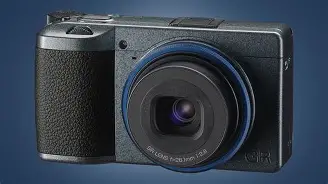
The Ricoh GR IV is the result of decades of refinement. It keeps the iconic silhouette that hasn't changed drastically since the film era, but the internals have been completely overhauled. The headline feature is the new 32-megapixel APS-C sensor paired with a modernized image processor. While the resolution is lower than the Manfrotto, the GR IV focuses on speed and efficiency. The venerable 18.3mm (28mm equivalent) f/2.8 lens remains, but it has been optically redesigned to handle the higher resolution and reduce chromatic aberration at the edges of the frame.
The GR IV introduces an improved 3-axis Shake Reduction system, which is a game-changer for street photographers working in low-light conditions. Furthermore, the legendary "Snap Focus" mode has been enhanced with smarter distance presets and better integration with the touchscreen. For the street photographer, the GR IV is an extension of the hand. It powers on in a fraction of a second, and its autofocus is virtually instantaneous. It is the ultimate tool for capturing "the decisive moment" where spontaneity is the highest priority.
Pros & Cons of the Ricoh GR IV
- Pros: Truly pocketable design that fits in a shirt pocket; it is the epitome of "stealth" photography. The Snap Focus feature remains the fastest way to shoot on the street. Highly effective in-body image stabilization allows for sharp handheld shots at slow shutter speeds. Excellent JPEG engine with "Negative Film" and "High Contrast B&W" recipes that require minimal post-processing.
- Cons: Lack of weather-sealing makes it vulnerable to dust and moisture. The fixed 28mm lens can feel too wide for those who prefer tighter framing or portraiture. The minimalist body lacks a built-in viewfinder (though an external one can be added), and the rear screen can be difficult to see in direct midday sunlight.
Head-to-Head Specification Comparison
To help visualize the differences between these two devices, the following table breaks down the key technical specifications that most impact daily usage and image output.
Find top-rated Cameras & Photography products at great prices.
See Deals →| Feature | Manfrotto One | Ricoh GR IV |
|---|---|---|
| Sensor Resolution | 40.2 Megapixels APS-C | 32.1 Megapixels APS-C |
| Lens Focal Length | 23mm (35mm Equivalent) | 18.3mm (28mm Equivalent) |
| Maximum Aperture | f/2.0 | f/2.8 |
| Image Stabilization | Lens-based Optical | 3-Axis In-Body (IBIS) |
| Weight | 410g (with battery/card) | 257g (with battery/card) |
| Weather Sealing | Full (Dust and Splash) | Non-sealed |
| Control Style | Analog Dials & Mechanical | Digital Jog Dials & Touch |
| Video Capability | 4K 30p (Log support) | 4K 60p (Standard) |
Real-World Use Cases: Which One Fits Your Style?
Technical specs only tell half the story. The choice between these two cameras often comes down to the "vibe" of the shoot. In our testing, we looked at three common scenarios for this class of camera: street photography, travel/landscape, and social documentary.
Scenario 1: The Urban Street Photographer
On the busy streets of London or Tokyo, the Ricoh GR IV is practically invisible. You can hold it in one hand, adjust settings with your thumb, and take a photo without anyone noticing. The 28mm field of view is perfect for "getting close" to the action. If you are the type of photographer who walks 10 miles a day looking for fleeting interactions, the GR IV is the clear winner purely due to its weight and the Snap Focus system. You don't "take" the camera with you; you just have it on your person.
Scenario 2: The Travel Documentarian
For someone hiking through the Swiss Alps or exploring the dusty markets of Marrakech, the Manfrotto One offers distinct advantages. Its weather sealing means you don't have to hide the camera the moment it starts to drizzle. The 35mm focal length is more versatile for capturing a mix of landscapes and portraits of the people you meet. Furthermore, the 40MP sensor allows you to crop into a 50mm or even 75mm equivalent and still have enough pixels for a beautiful large-format print in a travel journal. The Manfrotto feels like a "primary" camera, whereas the Ricoh often feels like a "secondary" backup.
Scenario 3: The Social and Family Chronicler
For capturing life’s everyday moments—dinners with friends, kids playing, or interior shots—the Manfrotto One’s f/2.0 aperture provides a significant advantage. This extra stop of light, combined with the slightly longer focal length, allows for actual subject separation from the background. The Ricoh GR IV, at f/2.8 and 28mm, tends to have a much deeper depth of field, which is great for architecture but less "dreamy" for candid portraits of people. If you want your photos to have a professional, shallow-depth-of-field look, the Manfrotto delivers more easily.
Buying Guide: Is It Worth the Upgrade?
Comparing these two is often a question of where you are coming from. If you are currently using a smartphone and want to take your first step into "real" photography, both will blow you away, but the Ricoh GR IV is easier to carry consistently. However, if you are an existing enthusiast, the decision becomes more nuanced.
Upgrade to the Ricoh GR IV if: You are currently using a GR II or GR III and feel the need for better autofocus and higher resolution, but you absolutely do not want to sacrifice the pocketable form factor. If your photography is 90% street-based and you rely on the speed of the GR ecosystem, there is no reason to look elsewhere. The GR IV is the most refined version of the world's best street camera.
Discover deals on Cameras & Photography — updated daily.
View Offers →Choose the Manfrotto One if: You have always loved the idea of a compact camera but found previous options felt too "plasticky" or toy-like. If you prefer the 35mm focal length over 28mm (a major point of contention among photographers), the Manfrotto One is one of the few high-end APS-C compacts to offer it. It is also the right choice if you frequently shoot in less-than-ideal weather or if you value the tactile experience of manual dials over touchscreen menus.
Wait if: You are strictly a video creator. While both cameras offer 4K capabilities, they are first and foremost stills-stills cameras. The lack of a flippy screen on either model and the fixed lenses make them specialized tools rather than general-purpose vlogging rigs. Similarly, if you are on a tight budget, the previous generation Ricoh GR III remains a stellar value on the used market, offering about 80% of the performance of these new models.
Conclusion
The Manfrotto One and the Ricoh GR IV represent two different peaks in the world of compact photography. The Ricoh GR IV is a masterclass in ergonomics and efficiency, proving that you don't need a massive rig to take world-class images. It remains the king of the pocket, perfected for speed and stealth. Its improvements in stabilization and sensor resolution make it a worthy successor to the GR throne.
The Manfrotto One, however, is a fascinating and successful newcomer. It targets the photographer who wants a more substantial, deliberate experience. By choosing a 35mm f/2 lens and a heavy-duty, weather-sealed body, Manfrotto has carved out a new space for the "pro-compact." It isn't trying to be a stealth camera; it's trying to be a rugged, high-resolution instrument for those who find the 28mm perspective of the Ricoh too wide and its body too delicate.
Ultimately, the "worth" of the upgrade depends on your pockets—literally and figuratively. If you want a camera that stays with you at all times and rewards quick reflexes, the Ricoh GR IV is the one to beat. If you want a camera that challenges you to compose more traditionally, thrives in the rain, and produces files with immense cropping potential, the Manfrotto One is a refreshing and highly capable alternative that justifies its place in the market.