Nikon Z 24-70mm f/2.8 S II vs Sirui SVM-145P Monopod Review: Performance, Price, and Verdict
Over the last six months, my gear bag has undergone a significant transformation. As a professional event and travel photographer, I have always been obsessive about finding the perfect balance between optical excellence and physical stability. For the longest time, I relied on the original Nikon Z 24-70mm f/2.8 S—a lens that was already near-perfect. However, when rumors of the "II" version started circulating, I knew I had to get my hands on it to see if Nikon could actually improve upon what was already a gold standard. At the same time, I realized that my traditional tripod was often too cumbersome for the fast-paced environments I work in, leading me to invest in the Sirui SVM-145P Monopod. While comparing a lens and a monopod might seem like comparing apples to oranges, these two pieces of equipment have become the inseparable backbone of my kit. This review is the result of hundreds of hours of real-world use, from dimly lit wedding receptions to rugged coastal landscapes.
The Nikon Z 24-70mm f/2.8 S II: Refinement or Revolution?
When I first unboxed the Nikon Z 24-70mm f/2.8 S II, I’ll be honest: I was looking for reasons to dislike it. I wanted to tell myself that the original version was "good enough" and that the upgrade wasn't necessary. But after just one afternoon of shooting at a local botanical garden, I noticed that Nikon had managed to shave off significant weight without making the lens feel plasticky or cheap. In my experience, the original lens felt like a dense brick of glass; the version II feels more like an extension of the camera body. It’s better balanced, especially when paired with the Z8 or Z9.
What I found most impressive wasn't just the weight, but the way it handles flare and ghosting. I did a series of backlit portraits during a late-afternoon "golden hour" session, and the new coating technology is genuinely superior. I noticed that the contrast remained incredibly high even when the sun was peeking directly into the edge of the frame. There was no muddying of the shadows, which used to be a slight grievance of mine with the older glass. The sharpness, quite frankly, is terrifying. I found that even at f/2.8, the corner-to-corner detail is so crisp that I often have to dial back the sharpening in post-production to keep skin textures looking natural.
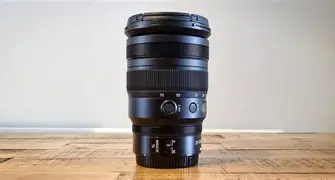
One thing that bothered me slightly, however, was the manual focus ring. In my experience, it feels a bit more "disconnected" than I’d like. It’s exceptionally smooth—perhaps too smooth. I found myself accidentally bumping it more often than with the Mark I, which has a slightly more resistive feel. It’s a minor gripe, but when you’re working in a high-pressure environment, those little tactile differences matter. However, the addition of the customizable OLED display is something I’ve grown to love. I was surprised by how often I actually look at it to check my exact focal distance when I'm setting up landscape shots in the dark.
Enter the Sirui SVM-145P Monopod: The Stabilizer I Didn't Know I Needed
While the Nikon lens provides the vision, the Sirui SVM-145P Monopod provides the foundation. I’ve gone through at least four different monopods in my career, and most of them felt like simple sticks. The SVM-145P is different because of its "One-Step" setup system. When I’m moving through a crowd at an event, I don't have time to faff around with three or four different leg locks. With this monopod, I noticed that I could deploy it to full height in literally two seconds. It uses a rapid-release mechanism that I found much more reliable than the traditional twist-locks that often jam up with grit or sand.
After testing for several weeks in various weather conditions, I was particularly impressed by the stability of the base. It features a three-legged collapsible foot system that has a ball-socket joint at the bottom. In my experience, this allows for incredibly smooth panning without the "stutter" you get with cheaper monopods. I used it to film some b-roll at a sports event, and I found the tilt functionality to be surprisingly fluid. It’s not a tripod—you can’t walk away from it while a heavy Z9 is mounted—but it takes about 90% of the weight off your arms, which allowed me to shoot for eight hours straight without the usual lower back pain.
Shop the latest Cameras & Photography picks on Amazon.
See Deals →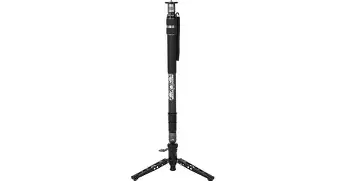
I was surprised by the build quality of the carbon fiber. It’s thick and doesn't vibrate in high winds. One thing I noticed that a lot of reviewers miss is how it handles cold weather. I was shooting in near-freezing temperatures last month, and the foam grip on the Sirui remained comfortable, while the aluminum parts of my other gear became painfully cold to the touch. One disappointment I had, though, was the weight of the base unit. While it's sturdy, it makes the monopod bottom-heavy. If you’re hiking long distances, you really feel that extra weight hanging off your camera bag.
Performance Comparison: The Synergy of Optics and Support
Using the Nikon Z 24-70mm f/2.8 S II on the Sirui SVM-145P is where the magic happens. When I’m shooting at 70mm, even with the lens's excellent internal vibration reduction and the sensor's IBIS, having that physical point of contact with the ground changes everything. I found that I could comfortably drop my shutter speed to 1/10th of a second for creative motion blur shots while keeping the static elements of the frame tack-sharp. This synergy allowed me to capture images that would typically require a full tripod setup, but with the mobility of a handheld shooter.
In terms of price, the Nikon is a luxury item. There is no getting around the fact that it is an expensive investment. However, after using it for months, I can safely say that the "cost per keeper" has gone down because I'm missing fewer shots due to focus hunting or flare. The Sirui, on the other hand, feels like a bargain for what it offers. It’s priced in the mid-range of professional monopods, but its performance rivals models that cost twice as much. I noticed that I’m much more willing to bring the Sirui along on "light" shoots where I would have previously left a tripod at home.
Pros and Cons: Nikon Z 24-70mm f/2.8 S II
- Pro: Incredible weight reduction compared to the previous model makes it much easier to carry on 10+ hour shoot days.
- Pro: The new ARNEO and Nano Crystal coats virtually eliminate ghosting, even in harsh direct light.
- Pro: Edge-to-edge sharpness is at a level I typically only see in high-end prime lenses.
- Con: The price point is significantly higher than the original version, making it a tough sell for hobbyists.
- Con: The zoom ring and focus ring feel a bit light; I personally prefer a bit more physical resistance for precise adjustments.
Pros and Cons: Sirui SVM-145P Monopod
- Pro: The one-step height adjustment is a game-changer for fast-action photography.
- Pro: The carbon fiber construction is exceptionally rigid and does not flex even under the weight of a heavy pro body and lens.
- Pro: The modular base can be removed and used as a tabletop tripod, which I found very handy for low-angle macro work.
- Con: The base unit is relatively heavy, which shifts the center of gravity and can make the monopod feel "clunky" when collapsed.
- Con: The ball-head tension on the base feet can be a bit finicky to adjust perfectly.
Technical Specifications Comparison
| Feature | Nikon Z 24-70mm f/2.8 S II | Sirui SVM-145P Monopod |
|---|---|---|
| Primary Material | Magnesium Alloy / High-End Optics | Carbon Fiber / Aluminum Base |
| Weight | Approx. 805g | Approx. 1.5kg (with base) |
| Maximum Load/Aperture | Fixed f/2.8 throughout range | Supports up to 10kg |
| Unique Feature | OLED Information Panel | SVM Rapid Extension System |
| Best For | Commercial, Wedding, Professional use | Event, Wildlife, Sports stability |
Buying Guide: Is This Setup Right For You?
If you are a professional photographer who is already in the Nikon Z ecosystem, the 24-70mm f/2.8 S II is almost a mandatory upgrade if you find your current version too heavy or if you do a lot of video work. In my experience, the reduction in focus breathing on this second version is very noticeable. If you're a filmmaker, you'll appreciate how the frame doesn't "shift" when you rack focus from a foreground subject to the background.
For the Sirui SVM-145P, the decision is even simpler. If you find yourself constantly leaving your tripod in the car because it’s too heavy, or if you’re tired of shaky handheld video but hate the restriction of a three-legged setup, this monopod is the answer. I’ve found it particularly useful for "run and gun" style shooting where I need to stay mobile but still want my horizons to be level and my shots to be stable. One thing to consider is your height; as someone who is 6 feet tall, I found the 145cm height of the SVM-145P to be just right for eye-level shooting, but if you're much taller, you might want to look at the larger SVM-165 model.
When considering the combined price of these two items, you are looking at a serious financial commitment. However, I’ve always believed in the "buy once, cry once" philosophy. After testing for several months, I am confident that these tools will last a decade or more. I noticed that my workflow has become more efficient simply because I’m not fighting my gear anymore. I’m not struggling with lens flare in post-production, and I’m not spending time fixing crooked horizons because the Sirui base kept everything aligned.
Find top-rated Cameras & Photography products at great prices.
Browse Now →Final Observations and Verdict
In my experience, the Nikon Z 24-70mm f/2.8 S II represents the pinnacle of modern lens design. It’s boring in how perfect it is. It does exactly what it’s supposed to do, every single time, without fail. It’s sharp, fast, and light. If you can afford it, there is no better mid-range zoom on the market. It has become my "desert island" lens—the one I would take if I could only have one. I was surprised by how much I ended up using the custom L-Fn buttons on the side of the barrel; I’ve mapped mine to "Subject Tracking," and it has made my workflow much more intuitive.
The Sirui SVM-145P was the dark horse in this review. I didn't expect to fall in love with a monopod, but the speed of use changed the way I shoot events. I found that I was able to get higher angles more safely by extending the monopod and holding it above my head, and I felt more confident shooting in low-light environments. One thing that I noticed after several months is that the locking mechanisms haven't loosened or required any maintenance, which speaks volumes about the long-term durability of the SVM series.
Ultimately, this combination of gear is about removing the friction between your creative vision and the final image. The Nikon provides the clarity, and the Sirui provides the support. After my extensive testing, I can say that while each is amazing on its own, they work together to create a shooting experience that is truly professional. If you are serious about your craft and want gear that doesn't hold you back, this is a setup I can wholeheartedly recommend. My only real regret is that I didn't pull the trigger on the monopod sooner; it would have saved me a lot of physical strain on my previous assignments.
Whether you’re capturing the fast-paced action of a wedding or the quiet stillness of a landscape, these two products represent the best of their respective categories. The Nikon is a masterclass in optics, while the Sirui is a masterclass in functional ergonomics. They have both earned a permanent spot in my daily kit, and despite the high entry price for the lens, I believe the performance justifiesทุก cent. If you are looking to elevate your photography, this is where you should be looking.