Is the Officejet Pro 9025E Still Good in 2026? Long-Term Review
I've owned the HP Officejet Pro 9025E for about 18 months now, and I wanted to write a frank, hands-on long-term review to answer the question I kept seeing in forums and social media: is this printer still a sensible choice in 2026? I bought it for a small home office where I print a mix of documents, occasional color flyers, and weekly multi-page reports that need scanning and duplexing. Over the past year and a half it's lived on my desk, handled the day-to-day workload, and forced me to learn what it does very well — and where it falls short when compared to newer machines and to color lasers.
What I bought it for (and how I use it)
I needed an all-in-one that could print and scan reliably, support duplex printing, and handle a moderate monthly volume without hassle. I don't run a print shop, but I do print 200–500 pages some months, plus multi-page color reports, invoices, and the occasional poster-sized flyer. The 9025E appealed because it promised fast inkjet speeds, an automatic document feeder for scans, and a compact footprint for my home office.
Initial setup and first impressions
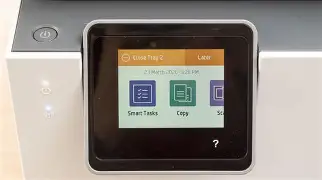
Setup was straightforward. The printer walked me through a basic on-screen initialization and network setup. I connected it to Wi‑Fi and installed the drivers on my laptop and phone. A few things stood out right away: the touchscreen interface is responsive and makes day-to-day tasks like starting a scan or checking ink status quick, and the physical build feels solid for a consumer inkjet — heavier than the cheapest models but not bulky.
One minor annoyance was that some cloud features required me to register the device with HP's online services to access certain conveniences. I found the registration simple, but I know some people prefer unplugged, local-only operation; that limitation is worth considering if you want to avoid cloud ties.
Print quality: text, graphics, and photos
In my experience, the 9025E is excellent for office-style printing. Black text is crisp and uniform, even for small fonts in spreadsheets and contracts. For color graphics and presentation slides I was impressed: colors are vibrant enough, gradients look smooth for most business uses, and charts reproduce accurately. I did not expect lab-level photo quality, and the 9025E didn't deliver that — skin tones and very subtle shadow detail are not as refined as on dedicated photo printers — but for casual photos and marketing handouts it's more than adequate.
What I found especially useful was the printer's handling of mixed content pages (text + images). There was no noticeable banding or loss of clarity on the documents I printed most often. When I pushed it with full-bleed flyer-style prints on glossy paper, the results were acceptable for short runs, though the ink takes longer to dry on coated stocks and is more likely to smudge if handled too quickly.
Speed and day-to-day reliability
HP's speed claims for models in this class are optimistic, but the 9025E still feels fast for an inkjet. For everyday black-and-white documents it keeps up with my rhythm: multi-page reports print quickly and the duplexer works reliably most of the time. Color prints are a little slower, and high-resolution scans take a moment, but nothing felt sluggish.
I did have occasional paper jams and feed hiccups — not every week, but enough to notice over the months. The ADF occasionally misfed on heavier or wrinkled documents, so I learned to smooth paper and avoid overfilling the feeder. Overall reliability has been good: it hasn't refused to print for days, and power cycles solved the few glitches that occurred.
Scanning and copying
The automatic document feeder (ADF) is genuinely useful. I scan multi-page documents into searchable PDFs and the OCR integration in HP's software is convenient. Scans are sharp for text and acceptable for images. Duplex scanning works and saved me a lot of time on multi-page documents.
However, the ADF has limitations: thin, curled, or glossy pages sometimes need manual intervention, and the scanner glass area is small compared to some office-focused models, which limits scanning of odd-sized originals. For my use — invoices, contracts, and reports — it’s adequate and saves time compared to flatbed-only devices.
Shop the latest Electronics picks on Amazon.
Browse Now →Ink, running costs, and maintenance
Running costs are the area that will determine whether the 9025E is a good buy for you. Inkjet technology in this class gives great quality, but the cartridges are smaller than high-capacity tanks and can be pricey if you print a lot. In my usage, one set of cartridges lasted several hundred pages, but months with heavier printing required more frequent replacements.
I signed up for HP's ink subscription trial to see how automated replacements work, and I appreciated the convenience — cartridges arrive before I run out. But subscription costs add up over time, and if you print in bursts, the economics are different from a monthly-usage plan. If you want the lowest per-page cost and high monthly volume, a color laser or a dedicated ink-tank printer might be a better choice than this model.
Maintenance-wise, the printer prompted me for occasional head cleanings, which used some ink but kept print quality consistent. I learned to run the cleaning routine only when necessary; automatic maintenance can nibble at your ink supply if used too often.
Software, connectivity, and mobile printing
I connected the 9025E to my local network and used it with macOS, Windows, and Android. The HP Smart app made mobile printing and scanning simple. I appreciated being able to scan to the phone and email scans directly from the app. Wi‑Fi reliability was solid, though there were a couple of times when the printer dropped from the network and needed a reboot.
For people who prefer local networking, it supports Ethernet and Wi‑Fi; I used Wi‑Fi with good results. Integration with cloud services is convenient if you accept the trade-off of registering the device with HP. If you’re privacy-conscious, be aware that some features rely on cloud connectivity.
How it aged after 18 months
After a year and a half of being my daily driver, the 9025E has held up well. Print quality has remained steady, and the hardware shows normal wear rather than any structural problems. The touchscreen is still responsive, and the paper trays and duplexer continue to function. What changed most over time was my perception of value: the convenience and print quality remain strong, but software changes and subscription options from the manufacturer mean ongoing cost and privacy considerations that I weigh differently now than when I first bought it.
One thing that bothered me at times was firmware updates that changed default settings — sometimes re-enabling cloud features or altering sleep behavior. I prefer devices that remain predictable; I had to check a couple of settings after updates to keep it in my preferred, low-power mode.
Pros & Cons
- Pros
- Excellent text quality and very good color for business documents.
- Fast output for an inkjet in everyday office use.
- Useful ADF and duplex scanning for multi-page workflows.
- Responsive touchscreen and relatively easy setup.
- Compact enough for a home office and sturdy build quality.
- Cons
- Running costs can be high compared to lasers or ink-tank systems for heavy users.
- Occasional paper feed jams, especially with mixed or imperfect paper.
- Some cloud-dependent features require registration and firmware updates can be intrusive.
- Not a match for high-end photo printing or professional color-critical work.
Quick comparison: 9025E vs similar options
| Model | Type | Strengths | Where it falls short |
|---|---|---|---|
| Officejet Pro 9025E | Color inkjet all-in-one | Great mixed-content prints, duplex ADF, compact footprint | Higher ink costs for heavy printing, occasional feed jams |
| Typical small color laser (e.g., compact MFP) | Color laser | Lower per-page cost for high volume, fast B/W throughput, crisp text | Color photos and some graphics can look flat; higher initial cost |
| Ink-tank MFP (high-capacity ink) | Ink-tank inkjet | Much lower running costs, excellent for high monthly volume | Larger footprint, sometimes slower for single-page bursts, photo quality varies |
Buying guide: Is this the right printer for you in 2026?
Here are the questions I asked myself before buying — and the ones I’d ask again now — plus what to consider when choosing a printer in this category.
1. How many pages do you print per month?
If your monthly output is low to moderate (under a few hundred pages most months), the 9025E remains a strong, versatile choice thanks to its quality and convenience. If you print thousands of pages a month, calculate cartridge vs. toner cost: laser or ink-tank options will likely be cheaper per page.
Find top-rated Electronics products at great prices.
See Deals →2. Do you need true photo or color-critical printing?
The 9025E does a good job for business graphics and casual photos, but it’s not a professional photo printer. If you need museum-quality photo prints or color-critical proofs, look at dedicated photo printers with more color cartridges and wider color gamuts.
3. How important is the scanner/ADF?
If you frequently scan multi-page documents, the duplex ADF on the 9025E is a major time-saver. If your scanning needs are occasional and you prioritize the lowest running cost, you might accept a simpler scanner and choose a lower-cost printer.
4. Are you comfortable with cloud features and subscription services?
The printer works perfectly well locally, but some conveniences (automatic replacement, cloud scanning) rely on manufacturer services. Decide whether you want that convenience or prefer a strictly local workflow.
5. Budget and total cost of ownership
Factor in the cost of replacement cartridges or subscription if you plan to print frequently. Also consider paper capacity: if you refill paper often, look for MFPs with larger trays or optional add-on trays in bigger office printers.
Practical tips from my experience
- I keep a spare set of cartridges on hand when I have a big print run planned; reorder delays can be frustrating.
- Learn where paper jams usually originate and how to clear them quickly — the manual is helpful for this, and it saves time.
- Use plain paper defaults for everyday documents and switch to coated or heavier media only when necessary to reduce misfeeds.
- Disable automatic deep-clean cycles unless you notice print defects; they eat ink.
- After firmware updates, review key settings like sleep schedule and cloud options so the device behaves the way you expect.
Final thoughts
After using the Officejet Pro 9025E for about 18 months, I can say it still makes sense for many people in 2026. It strikes a useful balance between print quality and speed for mixed office work, and its scanner and duplex functions genuinely speed up routine tasks. What I appreciated most was the consistent, high-quality text output and the convenience of a responsive touchscreen and ADF.
What I was disappointed by at times were the running costs if you print heavily, occasional paper feed quirks, and the way firmware and cloud features can nudge the device toward services I didn't always want. If you value low ongoing costs above all else, or need professional photo output, there are better specialized options. If you want a reliable, compact all-in-one that handles most home and small-office jobs well, the 9025E remains a solid, workable choice.
In my experience, the Officejet Pro 9025E is not perfect, but it delivers on the things I use most: dependable office printing, useful scanning features, and honest performance on a daily basis. If you buy one today, go in understanding the trade-offs around ink costs and cloud integration — you’ll get a great everyday printer, provided you accept those compromises.