Biggest Kanto Ren Buying Mistakes (And How to Avoid Them)
The Kanto Ren is a modern powered bookshelf speaker designed to bridge the gap between stylish consumer audio and practical desktop/home-theater use. Its blend of compact form, active amplification, and multiple input options makes it attractive to many buyers. Yet several common pitfalls lead to disappointment after purchase — mismatched expectations, improper placement, and overlooked connectivity needs among them. This article explains the most frequent mistakes buyers make when choosing the Kanto Ren, provides an impartial analysis of the product in real-world contexts, lists pros and cons, offers a concise comparison with other approaches, and finishes with a practical buying guide to help prospective owners avoid regret.
Introduction: Why buyers keep choosing the Kanto Ren — and where they go wrong
Buyers gravitate toward the Kanto Ren for its convenience: powered speakers eliminate the need for a separate amplifier, and built-in wireless connectivity simplifies setup with phones and laptops. Many shoppers are also drawn to its compact footprint and contemporary styling suitable for desks and smaller living rooms. However, the features that make the Ren appealing also hide traps. Consumers often assume powered equals "plug-and-play perfect" without considering room acoustics, latency for TV use, or how the Ren integrates with a subwoofer or streamer. Expectations about volume, bass, and sound signature can also misalign with reality.
Detailed product review and real-world analysis
The Kanto Ren occupies a practical niche: it is a powered, two-way bookshelf speaker aimed at people who want an easy, relatively compact audio solution for desktops, near-field listening, or small rooms. In real-world use, owners report a generally balanced sound that performs well with spoken word (podcasts, video calls), streaming music, and as the front-stage for compact TV setups when latency is managed correctly.
Strengths in everyday scenarios include simple connectivity and reduced clutter. For a home office or an apartment where space is limited, the Ren removes the need for a separate receiver and speaker wire runs. Many buyers appreciate its straight-forward inputs that cover phones, laptops, and TVs via analog or digital options, making it versatile for mixed use: music streaming, gaming, and casual TV watching.
However, practical caveats emerge in realistic listening environments. First, the perceived bass and overall tactile impact heavily depend on room size and placement. On a desk or placed near a wall, the speaker’s low-frequency performance can be altered dramatically — sometimes enough that listeners expect "boom" that the compact enclosure cannot deliver without a subwoofer. Expectation management is critical: a compact powered bookshelf cannot produce the same low-frequency authority as a floor-standing speaker or a dedicated sub.
Second, latency and audio sync are common issues in TV or gaming use when relying on Bluetooth. Wireless codecs vary, and while Bluetooth offers convenience, optical or wired connections typically provide more reliable lip-sync and lower latency. Buyers who primarily plan to use the Ren with a TV or gaming console should prioritize wired digital inputs or ensure the TV supports low-latency audio passthrough.
Third, placement and isolation matter more than many shoppers assume. The Ren benefits from stands or decoupling pads that keep vibrations from transferring into furniture. On a bookshelf or desk, reflections and resonances can thin or muddy the sound. Using appropriate stands, allowing space behind the speaker, and avoiding cramped corners will yield noticeably better clarity and imaging.
Use cases and how the Ren performs
- Desktop workstation (music, calls, light gaming): Very convenient. The Ren provides clear mids and highs for voice and music at close listening distances. Stands or isolation pads are recommended for best imaging.
- Small living room or studio apartment (TV and music): Works well as primary stereo for TVs when connected optically; pairing with a small subwoofer often improves movie bass and immersion.
- Home studio monitoring: Acceptable for reference listening in casual production or editing work, but critical listeners should verify neutrality and compare with known monitors before relying on the Ren for mixing decisions.
- Large room listening or parties: The Ren is not intended to fill large open spaces with authoritative bass — a larger system or subwoofer will be needed.
Pros & Cons
- Pros:
- Active (powered) design removes need for external amplification, simplifying setup
- Compact footprint fits desks and small media consoles
- Multiple inputs cover phones, computers, and TV sources for flexible use
- Often praised for clear mids and smooth high-frequency delivery
- Good build quality and contemporary aesthetic that integrates with modern interiors
- Cons:
- Limited low-frequency extension without a subwoofer
- Bluetooth may introduce latency and lower fidelity compared with wired digital inputs
- Placement-sensitive: sound changes noticeably with room and positioning
- Not tailored for audiophile reference listening or large-room levels
Comparison table: Kanto Ren versus common alternatives
| Feature | Kanto Ren (powered bookshelf) | Passive Bookshelf + Amp | Powered Soundbar or All-in-One TV Bar |
|---|---|---|---|
| Setup complexity | Low — plug-and-play with source options | Higher — requires amp/receiver and speaker wiring | Low — designed for TV integration |
| Room suitability | Best for small to medium rooms or close listening | Flexible — can scale to room size with different amps/speakers | Primarily living rooms and TV desks |
| Bass performance | Moderate — improved with a subwoofer | Varies — can be matched with larger speakers for deep bass | Generally enhanced — some include subwoofer or sub out |
| Connectivity | Multiple inputs; wireless optional | Depends on amp; typically more flexible with upgrades | Optimized for HDMI/optical and streaming devices |
| Upgrade path | Limited internal; can add subwoofer or external DAC | Extensive — swap speakers/amp freely | Often limited — designed as integrated solutions |
Biggest buying mistakes and how to avoid them
Mistake 1: Buying based only on looks or size
Many buyers choose the Ren because it fits a desk or looks good on a shelf. While aesthetics matter, sound performance is strongly influenced by placement and room acoustics. Avoid relying only on appearance. Instead, test with familiar tracks and check how the speaker behaves in the intended location. If in-store listening isn’t possible, read multiple real-world reviews and check return policies.
Mistake 2: Ignoring room size and expectations for bass
Expecting floor-standing levels of bass from a compact powered bookshelf leads to disappointment. If movies, electronic music, or home-theater rumble are priorities, plan for a subwoofer. Look for a Ren with a subwoofer output or plan to add a compact sub to preserve space while extending low frequencies.
Looking for the best Audio & Headphones deals on Amazon?
See Deals →Mistake 3: Overlooking latency needs for TV and gaming
Bluetooth convenience masks potential latency. For TV or console use where audio sync matters, prioritize optical or wired connections over Bluetooth. If using Bluetooth, verify whether the speaker and source support low-latency codecs or an audio delay correction feature on the TV.
Mistake 4: Not planning for placement and stands
Placing speakers directly on a desk or shelf without decoupling can smear imaging and lower clarity. Invest in speaker stands, isolation pads, or wall mounts (if supported) to control resonances and achieve cleaner mids and better stereo separation. When space is limited, use stands of appropriate height to align the tweeters with ear level for seated listening.
Mistake 5: Assuming powered means universally compatible
Powered speakers remove an amp, but that doesn’t guarantee compatibility with every source. Check inputs and output levels: some sources require line-level inputs, others work best with digital optical or USB. Confirm that the Ren’s input set matches the buyer’s primary devices (TV, turntable with phono preamp, DAC/streamer, etc.).
Mistake 6: Buying without auditioning familiar content
Listening to unknown demo tracks hides how a speaker handles familiar music. Always audition using songs the buyer knows well — tracks that reveal weaknesses in bass, midrange, or high-frequency detail. If auditioning isn’t possible, buy from a retailer with a friendly return policy or test in the first 30 days.
Buying guide: what buyers should check before purchasing
Use this checklist when evaluating the Kanto Ren or similar powered bookshelf speakers.
1. Determine primary use case
Identify whether the primary role will be desktop music, TV and movies, gaming, or music production. Prioritize inputs and features accordingly: TV and gaming benefit from optical or HDMI connections and low latency; music production benefits from accurate, neutral sound and possibly balanced inputs.
2. Confirm available inputs and outputs
Match the speaker’s inputs to the existing equipment list. If the household uses a smart TV, streaming stick, game console, and phone, confirm which will be wired and which will be wireless. If a turntable is part of the plan, ensure a phono preamp exists before connecting.
3. Check for subwoofer integration
If bass impact is important, verify the presence of a subwoofer output or a way to add bass reinforcement. Confirm whether the speaker provides a high-pass filter, phase switch, or level control for easier integration with a subwoofer.
Find top-rated Audio & Headphones products at great prices.
View Offers →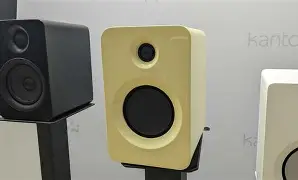
4. Consider room size and placement
Measure the listening distance, ceiling height, and available wall space. Nearfield desktop listening requires less power and bass extension, while a living room requires more consideration for dispersion and room modes. Decide on stands or isolation tools ahead of time.
5. Understand the wireless behavior
If Bluetooth will be used frequently, research supported codecs and how the speaker behaves with real-world sources. For TV use, prefer wired connections where possible to avoid lip-sync issues.
6. Evaluate warranty and support
Products with straightforward warranty coverage and responsive support reduce long-term risk. Check the manufacturer’s warranty period and whether local service or authorized repair centers exist within reach.
7. Read multiple real-world reviews and owner reports
Professional reviews often test frequency response and measurements, while owner reports reveal daily-life issues like firmware updates, connectivity quirks, and longevity. Both perspectives are valuable when assessing long-term satisfaction.
Practical tips for getting the best performance out of the Ren
- Place at ear level: Align the tweeter with the listener’s ears for best imaging when seated.
- Allow breathing room: Keep speakers several inches from the wall to reduce muddiness unless the speaker is tuned for wall placement.
- Use isolation: Choose stands or pads designed to decouple speakers from furniture to avoid resonant coloration.
- Match sensitivities: When adding a subwoofer, set crossover and phase carefully to avoid gaps or overlaps in the bass response.
- Prefer wired for critical sync: Use optical, USB, or wired line inputs for TV and console to avoid Bluetooth delay.
- Test with favorite tracks: Listen to familiar music at typical volumes to judge tonal balance and dynamic headroom.
Conclusion
The Kanto Ren offers a compelling, compact option for buyers who want powered bookshelf speakers with flexible connectivity and clean styling. Many users find it an excellent fit for desks, small living rooms, and multi-source setups — provided expectations are aligned with the speaker’s physical and acoustic limitations. The most frequent mistakes stem from expecting deep bass from a small enclosure, relying solely on Bluetooth for TV use, and ignoring placement and integration needs.
By clarifying the primary use case, verifying input compatibility, planning for placement and subwoofer integration when necessary, and auditioning with familiar content, buyers can avoid these pitfalls and get a satisfying experience from the Ren. In practical settings, careful setup and modest supplemental equipment — a stand or an optional subwoofer — will usually deliver the best results and allow the Ren to perform to its strengths.